How to report Bitcoin on your taxes
Reporting your Bitcoin transactions on your federal taxes is essential to comply with IRS regulations.

Reporting your Bitcoin transactions on your federal taxes is essential to comply with IRS regulations.
Whether you've sold Bitcoin for a profit, received it as payment, or earned it through mining, it's important to accurately report these activities.
This guide provides a step-by-step approach to help you navigate the reporting process for the current tax year.
Upload your Bitcoin transactions and get a tax report ready to file
Step 1: Gather Your Documents
Accurate reporting starts with thorough record keeping.
Collect data summarizing your Bitcoin transactions throughout the year, including sales, purchases, mining, and payments.
Essential information for each transaction includes:
- Description of property (i.e., Bitcoin)
- Date acquired
- Date sold or disposed of
- Proceeds
- Cost or other basis
- Adjustments to your gain or loss
- Total gain or loss
Utilizing tax software like Summ can streamline this process by analyzing your transaction history once you connect your exchange accounts or wallets.
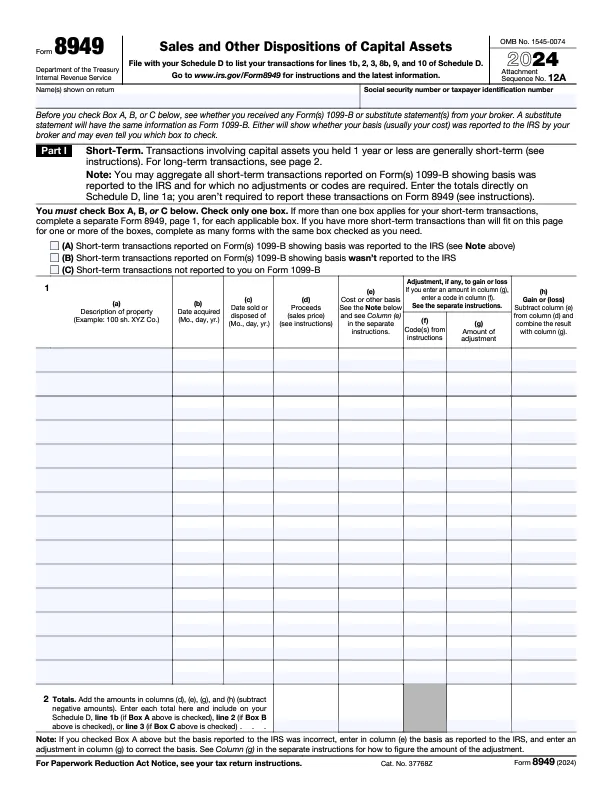
Step 2: Calculate Your Gains and Losses Using Form 8949
Record all Bitcoin transactions on IRS Form 8949, separating short-term (held for one year or less) from long-term (held for more than one year) transactions.
This form helps calculate your total capital gains or losses.
Step 3: Report Your Gains and Losses on Schedule D
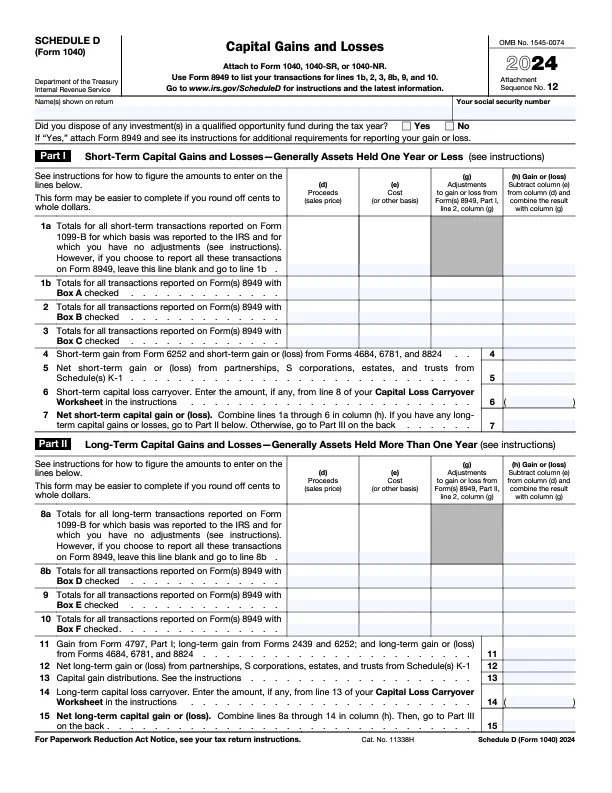
Transfer the totals from Form 8949 to Schedule D (Form 1040), which summarizes your overall capital gains and losses.
Step 4: Report Any Other Bitcoin Income
If you've earned Bitcoin through mining, staking, airdrops, or as payment for services, report this income on Schedule 1 (Form 1040), Line 8z.
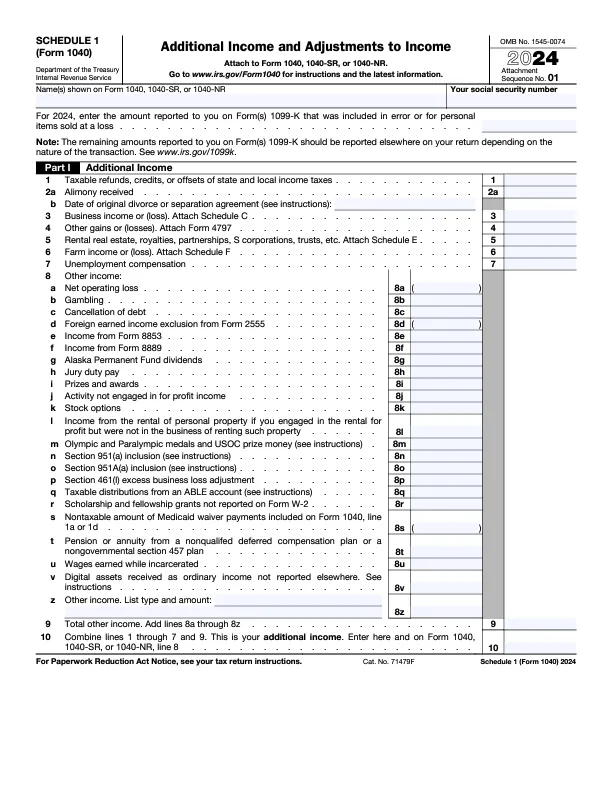
For self-employed individuals receiving Bitcoin as payment, report this on Schedule C (Form 1040).
Step 5: Complete Your Income Tax Return
After accounting for all Bitcoin-related income and transactions, finalize your tax return by including any additional income sources and deductions. Ensure all information is accurate before submitting to the IRS.
How to Report Bitcoin Losses on Taxes
The IRS allows you to deduct Bitcoin losses to offset gains. For example, if you bought Bitcoin for $5,000 and sold it for $4,500, you can deduct the $500 loss. Report these losses on Form 8949 and Schedule D to ensure they're accurately accounted for.
In years where your losses exceed your gains, you can claim up to a $3,000 net loss to offset other income. Any excess losses can be carried forward to future years.
How to Report Bitcoin Mining Income on Taxes
Bitcoin earned through mining is considered taxable income. Report the fair market value of the mined Bitcoin at the time of receipt on Schedule 1 (Form 1040). If mining constitutes a trade or business, report this income on Schedule C (Form 1040), allowing for the deduction of related expenses.
How to Reduce Your Bitcoin Tax Liability
Consider the following strategies to minimize your Bitcoin tax liability:
- Offset Gains with Losses: Sell underperforming assets to realize losses that can offset gains.
- Hold Bitcoin for More Than One Year: Qualify for lower long-term capital gains tax rates by holding Bitcoin for over a year.
- Invest Through Retirement Accounts: Utilize self-directed IRAs to benefit from tax-free growth on Bitcoin investments.
- Donate Bitcoin: Donating appreciated Bitcoin to qualified charities can provide tax deductions and avoid capital gains taxes.
For personalized advice, consult with a tax professional familiar with cryptocurrency taxation.
By diligently following these steps and maintaining accurate records, you can ensure compliance with IRS regulations and effectively manage your Bitcoin tax obligations.
Die auf dieser Website bereitgestellten Informationen sind allgemeiner Natur und stellen keine Steuer-, Buchhaltungs- oder Rechtsberatung dar. Sie wurden ohne Berücksichtigung Ihrer persönlichen Ziele, Ihrer finanziellen Situation oder Ihrer Bedürfnisse erstellt. Bevor Sie auf Grundlage dieser Informationen handeln, sollten Sie deren Eignung im Hinblick auf Ihre eigenen Ziele, Ihre finanzielle Situation und Ihre Bedürfnisse prüfen und professionelle Beratung in Anspruch nehmen. Summ (früher Crypto Tax Calculator) schließt jegliche ausdrücklichen oder stillschweigenden Garantien, Zusicherungen und Gewährleistungen aus und haftet nicht für Verluste oder Schäden jeglicher Art (einschließlich menschlicher oder computerbedingter Fehler, ob fahrlässig oder nicht, sowie Neben- oder Folgeschäden), die aus der Nutzung oder dem Vertrauen auf die Informationen oder Ratschläge dieser Website entstehen oder damit im Zusammenhang stehen. Die Nutzerin bzw. der Nutzer trägt die alleinige Verantwortung für die Verwendung der Inhalte dieser Website, unabhängig vom Zweck, für den diese Nutzung oder deren Ergebnisse angewendet werden. Die Informationen auf dieser Website sind kein Ersatz für fachkundige Beratung.

James Edwards has been active in the cryptocurrency industry for over 10 years. He is an avid user of DeFi and believes in the promise of a user-owned and operated web. His expertise as a cryptocurrency journalist has seen him contribute to publications such as Nasdaq, CoinMarketCap and CoinTelegraph.
Weitere Ressourcen

Bitcoin Taxes in the USA: The Complete 2025 Guide
Bitcoin is taxed as either capital gains or income tax depending on the transaction. Learn how to do your Bitcoin taxes with this guide.
Weiterlesen
How To Report Crypto On Form 8949
In this guide we’ll run through everything you need to know about Form 8949 and how to fill it out.
Weiterlesen
How To Report Crypto On Schedule D (form 1040)
A step-by-step guide showing you how to fill out crypto on IRS Form Schedule D (form 1040).
Weiterlesen
How To Report Your Coinbase Taxes in the USA
The easiest way to calculate your Coinbase taxes is to use a crypto tax software like Summ, an official Coinbase tax partner.
Weiterlesen