Why micro-investing makes your crypto tax return a lot less scary
Most micro-investors, the people who put small amounts into one or two crypto assets and leave them alone, have a far simpler tax position than they fear. Here's why, and what you still need to track.

Guest post by Bamboo
Most people who avoid crypto don't avoid it because they don't believe in it. They avoid it because it feels complicated, and tax time compounds that complexity.
That instinct isn't wrong. Crypto tax can be complicated. If you're actively trading, swapping tokens, staking across multiple protocols, or running a portfolio across five exchanges, your end-of-financial-year position can be genuinely messy.
But there's a quieter corner of the crypto world that rarely gets talked about in tax conversations: people who invest small amounts regularly into one or two assets and leave them alone. And for them, the tax picture looks a lot more like a standard share investment than the horror story they've been imagining.
Let's start with what actually triggers a tax obligation
Before we get into strategy, it's worth grounding this in what the ATO actually cares about.
In Australia, cryptocurrency is treated as a capital gains tax (CGT) asset. That means you generally don't have a tax obligation when you buy crypto, only when you dispose of it. A disposal includes selling your crypto for Australian dollars, trading it for another cryptocurrency, or using it to buy goods or services.
Simply holding crypto, no matter how much it goes up in value, is not a taxable event. The gain only becomes real in the ATO's eyes when you crystallise it by selling or swapping.
This is important context for what comes next.
What micro-investing actually looks like
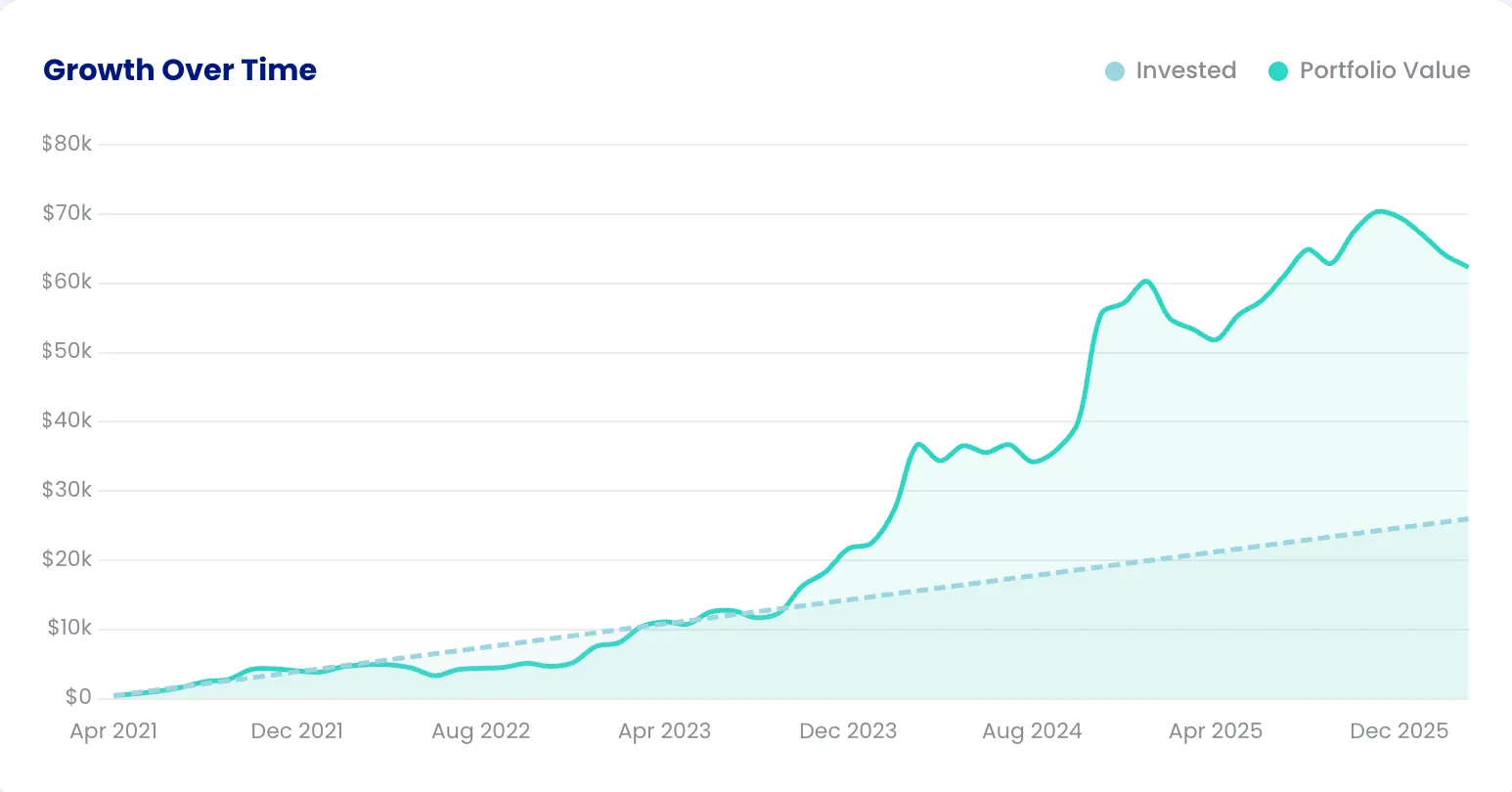
Micro-investing in crypto means putting in small, regular amounts, sometimes as little as a few dollars at a time, into one or more assets over an extended period. For many people, this happens automatically: a fixed weekly deposit or small amounts rounded up from everyday purchases, invested in the background.
Try the Bamboo Micro-Investment Calculator here and see for yourself.
The result is a portfolio built from many small purchases, each with its own cost base and purchase date. Rather than one big bet, you end up with dozens or hundreds of individual buy events spread over time.
Here's the thing: none of those individual buy events triggers a tax obligation on its own. You're simply acquiring an asset. The tax only becomes relevant when you sell.
Where it gets simpler than you think
Because micro-investors are typically buying the same asset (or a small number of assets) on a regular schedule and not actively trading, their tax situation at the end of the year tends to be straightforward:
Fewer disposal events. If you haven't sold anything, you may have no CGT events to report at all. Buying isn't a taxable event (only selling is).
No swap complexity. One of the more confusing elements of crypto tax is that swapping one cryptocurrency for another is treated as a disposal, which triggers CGT even if you never touched Australian dollars. Micro-investors who stick to one or two assets and don't swap between them sidestep this entirely.
The 12-month CGT discount becomes a natural benefit, for now. Investors who hold an asset for more than 12 months before selling are currently eligible for a 50% discount on any capital gain. When you're buying regularly over a long period, a significant portion of your holdings will naturally age past the 12-month threshold, not because you've structured anything cleverly, but simply because you started early and held on. (Note: the CGT discount is applied on a parcel-by-parcel basis, so it's worth keeping records of each purchase date and amount.)
It's worth knowing that the 2026-27 Federal Budget proposed replacing this 50% discount with an inflation-indexed model, alongside a 30% minimum tax on capital gains, from 1 July 2027. This is proposed legislation; it has not yet passed Parliament, but if it proceeds, only gains accruing after 1 July 2027 would be affected. Gains built up before that date would still be calculated under the current rules. This is an area to watch closely, and one where a registered tax professional can help you understand the impact on your specific position.
Record keeping is repetitive, not complex. With regular automated purchases from a regulated platform, your transaction history is typically clean, organised, and easy to export. The records exist. You just need to pull them.
What you do need to track
Simple doesn't mean zero effort. The ATO requires you to keep records for five years, and for CGT purposes, you'll need to know:
- The date of each purchase
- The amount paid (in AUD) at the time of purchase — this is your cost base
- The date of any sale or disposal
- The proceeds received (in AUD) at the time of sale
If you've been investing through a regulated platform, most of this information should be available in your transaction history or via a downloadable report (like on Bamboo). The important thing is not to assume the platform handles your taxes for you; it may not. But it does make gathering the raw data much easier than piecing together manual records.
The surprising part
Even in a simple micro-investing setup, there are a few things worth knowing before tax time.
Each purchase is its own parcel. When you eventually sell, you'll need to match those sales against specific parcels of your holding. The method you use (FIFO, HIFO, or another approach) can affect your tax outcome. In Australia, you can choose your method, but you need to be consistent and be able to demonstrate that your records support it. A good crypto tax tool will handle this calculation for you, but understanding that the choice exists is worth knowing. For Bamboo users, this is easily managed with our Summ partnership.
Automatic round-ups create real purchase events. If your investing happens through an automatic round-up feature, where small amounts are swept from everyday purchases, each of those round-ups is a legitimate acquisition event with its own date and cost base. They're not complicated, but they do add up, and they need to be in your records.
If you've never sold, you may have nothing to declare. This surprises a lot of people. If you've only ever bought and held, you may not have any CGT events to report for that financial year. That doesn't mean you ignore it at tax time; you should always confirm your position, but it does mean the anxiety is often bigger than the actual obligation.
The broader point
There's a reason tax conversations in the crypto space tend to focus on complexity: most of the people writing about crypto tax are experienced traders with complex portfolios. Their problems are real, and the guidance they need is genuinely technical.
But a large and growing group of Australians are doing something much simpler: putting a bit of money in, regularly, and leaving it alone. And for those people, the tax picture is much more manageable, because their behaviour naturally avoids most of the complexity.
The lesson isn't that you don't need to think about tax. You do, and you should use a proper tool to calculate and report your position correctly. The lesson is that the way you invest is directly related to how complicated your tax situation becomes, and simple, consistent investing tends to produce a simple, manageable tax outcome.
This article contains general information only and does not constitute financial or tax advice. As everyone's circumstances are different, please consult a registered tax professional for advice specific to your circumstances.
The information provided on this website is general in nature and is not tax, accounting or legal advice. It has been prepared without taking into account your objectives, financial situation or needs. Before acting on this information, you should consider the appropriateness of the information having regard to your own objectives, financial situation and needs and seek professional advice. Summ (formerly Crypto Tax Calculator) disclaims all and any guarantees, undertakings and warranties, expressed or implied, and is not liable for any loss or damage whatsoever (including human or computer error, negligent or otherwise, or incidental or Consequential Loss or damage) arising out of, or in connection with, any use or reliance on the information or advice in this website. The user must accept sole responsibility associated with the use of the material on this site, irrespective of the purpose for which such use or results are applied. The information in this website is no substitute for specialist advice.
More resources

The Best Portfolio Tracker in Australia for 2026
We compare the best portfolio trackers in Australia for 2026. Summ, Sharesight and Navexa reviewed on tracking, ATO tax reporting, crypto support and pricing.
Read More
Summ partners with Stake to power crypto tax reporting for Stake Super
Stake Super members can hold crypto in their SMSF, with tax reporting powered by Summ. Here is what the partnership means for you.
Read More
Buying your first crypto in 2026? The proposed tax changes matter less to you than to anyone else
The proposed CGT changes have dominated crypto media for months. For first-time investors, the practical impact is smaller than the headlines suggest. Here is what actually applies if you are buying your first crypto in 2026.
Read More